Fitness
Personal Trainer
Is your “weak side” really weaker?
October 22, 2026 | Kennadee Harrison
Is your “weak side” really weaker?
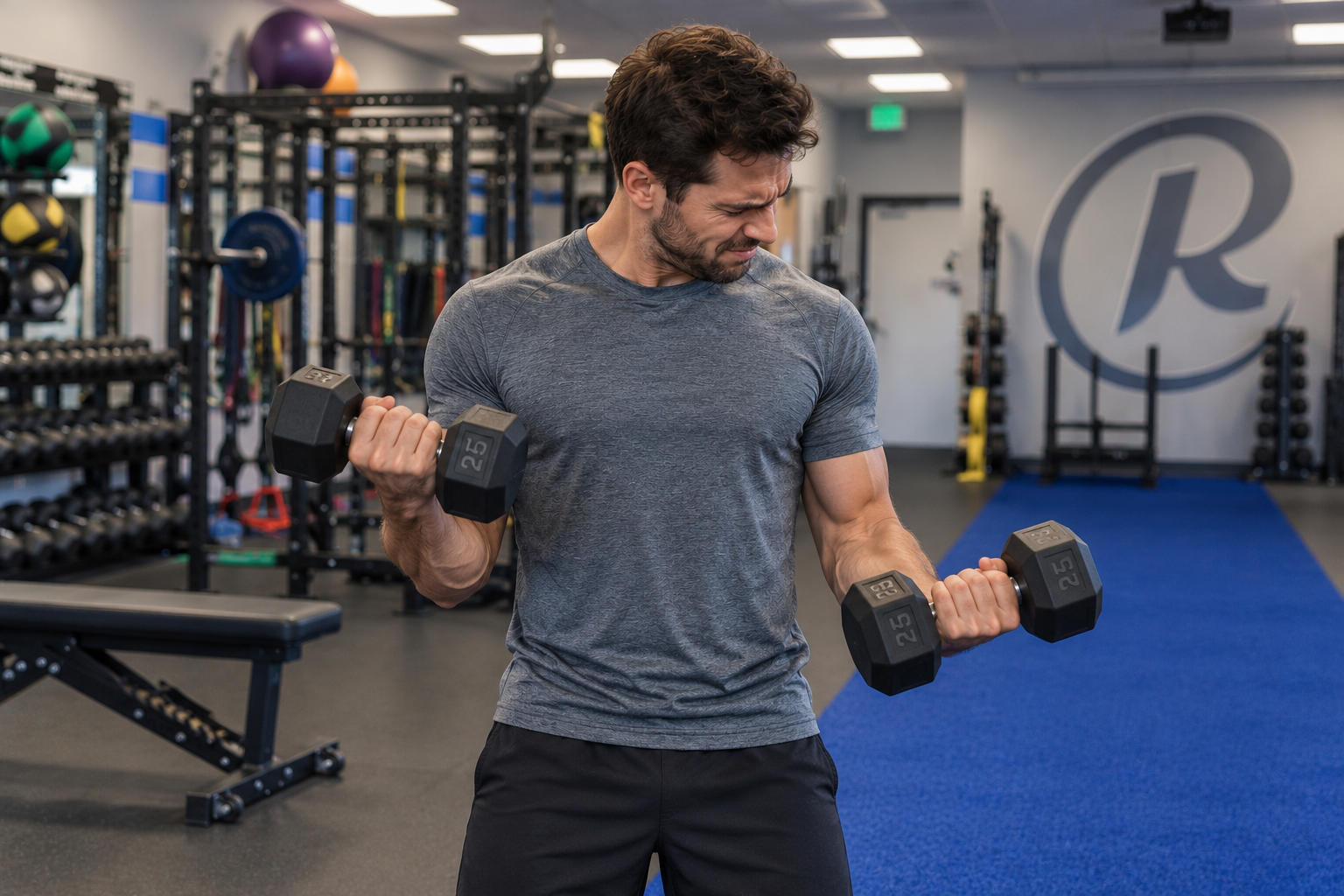
When you’re strength training, you might notice that during single-arm or single leg exercises, like a lunge or a single-arm row, one side feels easier than the other. I have heard plenty of clients share this observation during their training sessions, expressing that one side feels “weaker” than the other.
But is that all there is to it?
I thought this would be an interesting topic to dive into because, while it’s not uncommon for one side of our body to be stronger than the other, what feels like a strength difference could actually have more to do with stability, coordination, or mobility.
Let’s take a closer look at what’s happening and why understanding these differences can help you get more out of your training.
Why Does One Side Feel Stronger Than the Other?
Our bodies aren’t perfectly symmetrical, and that’s normal. Most of us naturally favor one side, whether it’s the hand we write with, the leg we lead with when climbing stairs, or the side we rely on during everyday activities.
Over time, these habits can contribute to differences in strength, coordination, and movement patterns. Previous injuries, mobility limitations, and familiarity with certain exercises can also influence how each side performs.
But here’s what’s interesting: Just because one side struggles more during an exercise doesn’t necessarily mean the muscles on that side are weaker.
Strength vs. Stability: What’s Actually Limiting You?
Let’s use a single-leg Romanian deadlift (RDL) as an example.
You might feel balanced and controlled when performing the exercise on your right leg, but when you switch to your left, suddenly you’re wobbling, adjusting your foot position, or having to put your other foot down between repetitions.
Does that automatically mean your left leg is weaker? Not necessarily.
During a single-leg RDL, your body needs more than strength to complete the movement. Your foot, ankle, hip, and trunk all work together to maintain balance and control your position.
If staying balanced requires more effort on one side, the movement can feel significantly harder, even when your muscles have enough strength to perform it.
Think about how much easier it is to lift something while standing on solid ground compared to an unstable surface. When you’re focused on maintaining balance, producing force becomes more challenging.
Of course, balance isn’t always the explanation. Fatigue, mobility restrictions, unfamiliarity with the exercise, and actual strength differences can all contribute.
That’s why, as coaches, we pay attention to how you perform an exercise, not just whether you can complete the repetitions.
Why We Train One Side at a Time
If you’re a Recoup client, you’ve probably noticed that we regularly incorporate exercises such as split squats, step-ups, single-arm rows, and single-leg deadlifts into your workouts. These are called unilateral exercises, meaning they emphasize one side of the body at a time.
Unlike exercises where both sides work together, unilateral movements allow us to observe how each side performs more independently. For example, you might complete the same number of step-ups on both legs but have noticeably less control when lowering yourself on one side. Or perhaps during a single-arm row, you compensate by rotating your torso on one side but not the other.
These observations help us make more informed coaching decisions. Sometimes that means adjusting the resistance, slowing down the movement, or modifying your range of motion to help develop better control. The goal isn’t perfect symmetry. It’s to build strength and improve movement quality while addressing differences that may be limiting your performance.
Should You Use the Same Weight on Both Sides?
Let’s say you can complete 10 single-arm rows with 25 pounds on your right side, but struggle to maintain good technique with that weight on your left.
Should you use different weights?
Not necessarily.
Depending on the exercise and your individual needs, we may recommend using the same resistance on both sides, choosing a weight your less capable side can control.
In this example, that might mean using 20 pounds for both arms.
This allows us to prioritize consistent movement quality while giving the less capable side an opportunity to develop strength and control.
However, there are situations where different weights are appropriate, particularly when working around an injury or addressing significant strength differences.
The important part is understanding why we’re making that decision rather than automatically assuming the stronger side should lift more.
Progress Isn’t Always About Lifting Heavier Weights
Here’s something worth remembering: Improving your movement quality is progress, too.
Think back to that single-leg RDL. Maybe when you first started, you struggled to maintain balance and frequently had to put your opposite foot down.
A few weeks later, you’re completing the same exercise with better balance, smoother movement, and greater confidence, even though you’re still using the same weight.
That’s progress!
You’ve improved your ability to coordinate and control the movement, creating a better foundation for developing strength. The same applies to a split squat that feels smoother or a step-up where you no longer need to push off your back foot as much. These improvements might not show up as a heavier dumbbell, but they’re meaningful signs that your body is adapting to training.
What Should You Notice During Your Next Workout?
The next time you’re performing a single-arm or single-leg exercise, pay attention to more than just the weight you’re using.
- Does one side feel less stable?
- Is it harder to control the movement?
- Does one side have a different range of motion?
- Does one side fatigue sooner?
- Do you notice yourself shifting or compensating?
Small differences are normal, and perfect symmetry isn’t the goal. But recognizing these patterns can give you and your trainer valuable information.
If something consistently feels different, mention it during your session. Sometimes a small adjustment to your positioning, resistance, or tempo can make a meaningful difference. Sudden or worsening weakness, or differences accompanied by pain or numbness, should be medically evaluated.
Remember, one side feeling more difficult doesn’t automatically mean it’s weaker. Understanding what’s behind that difference allows us to make more intentional training decisions.
Because getting stronger isn’t just about lifting more weight, it’s also about learning to control the movement of weight better.
Exercise
Fitness
Personal Trainer

Meet the Author:
Kennadee Harrison
Personal Trainer
Personal Trainer at Recoup Personal Training. A former competitive soccer player coaching since 2017, Kennadee helps clients build inner strength, resilience, and a confident mindset that carries beyond the gym.