Grip Strength: The Surprising Longevity Biomarker You Can Improve
June 18, 2025 | Recoup Owners
Grip Strength: The Surprising Longevity Biomarker You Can Improve
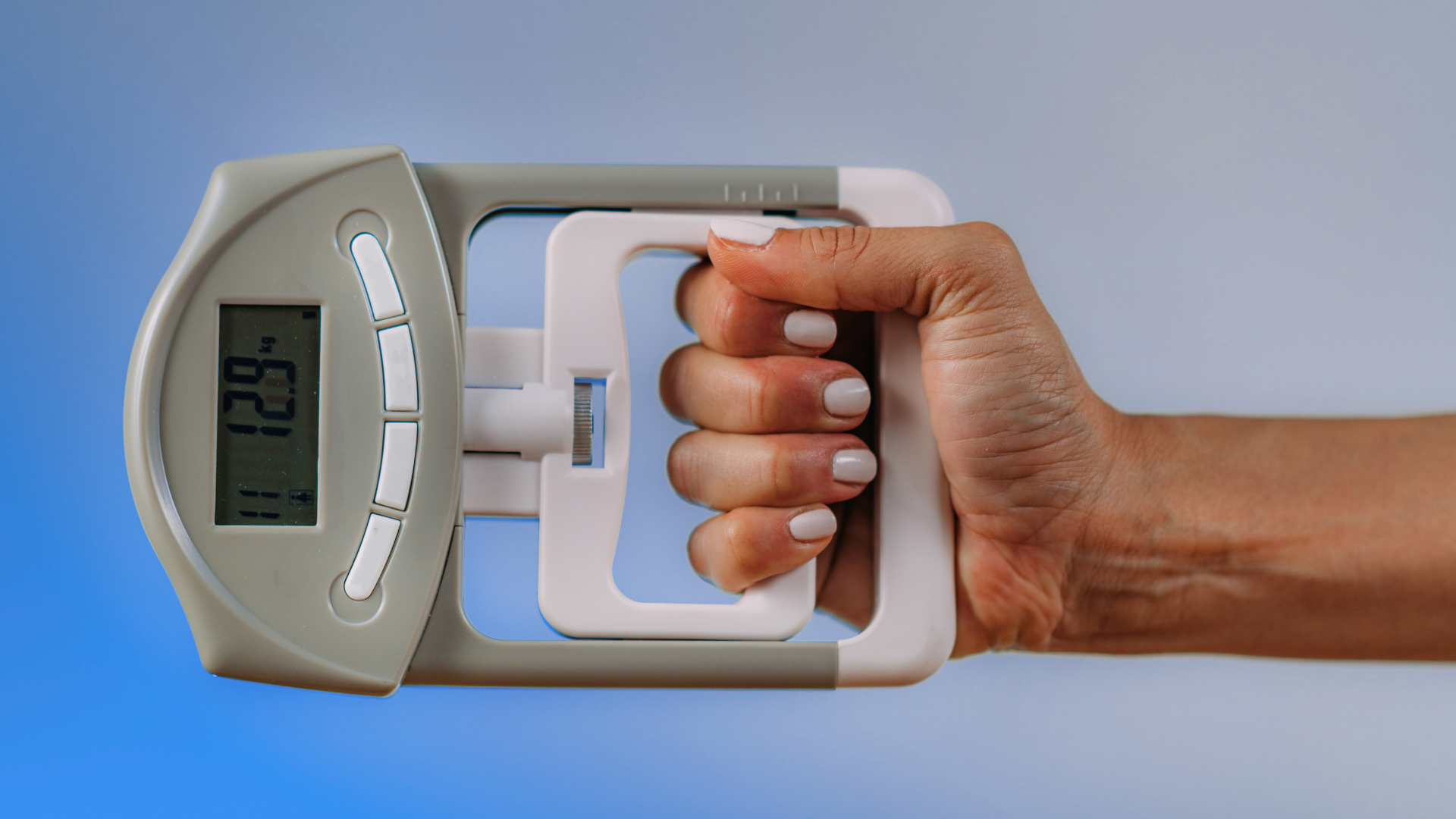
If you’ve recently completed an InBody scan at Recoup, you may have noticed a stat labeled “Relative Grip Strength” generated by the InGrip device. It’s easy to gloss over numbers you don’t fully understand, especially when they’re given as a percentage. But this stat is far more than just a grip test. In fact, it’s one of the most powerful predictors of your overall strength, functionality, and longevity.
Let’s break it down.
📊 What Is Relative Grip Strength?
Unlike absolute grip strength (which measures how many total pounds or kilograms you can squeeze), relative grip strength compares your grip strength to your bodyweight. This ratio gives a more meaningful picture of how strong you are for your size.
For example:
- If someone weighs 150 lbs and can grip 90 lbs, their relative grip strength is 0.60.
- The InGrip takes that and converts it to a percentage, in this case, 60%.
This allows us to fairly assess strength across different body sizes, and that’s where it gets powerful.
💡 Why It Matters
Studies show that higher relative grip strength is strongly associated with:
- Lower risk of chronic disease
- Better metabolic health
- Increased muscle quality
- Decreased risk of falls and frailty as we age
- Even longer life expectancy
In athletic terms, it’s a fast snapshot of how functionally strong you are, especially for sports and movements that require bodyweight control like climbing, push-ups, pull-ups, or even carrying your kids.
So when your InGrip score says 48% or 62%, that’s telling you how much of your own bodyweight you can effectively grip, which is a powerful indicator of usable, functional strength.
🔍 How to Assess Your Numbers
Here’s a general framework based on research-backed benchmarks:
| Relative Grip Strength (%) | Category | What It Means |
|---|---|---|
| <45% (Men), <30% (Women) | Weak | Increased risk for injury or frailty |
| 45–65% (Men), 30–50% (Women) | Average | Normal functional strength for your weight |
| >65% (Men), >50% (Women) | Strong | Great muscular fitness and aging resilience |
Note: These are general standards, not fixed rules. Progress always beats perfection.
📈 How to Improve Your Relative Grip Strength
Good news: You can absolutely train this metric, and you don’t need to obsess over squeezing hand grippers all day.
Here’s how:
1. Strength Train Consistently
- Strengthening your total body (especially pulling movements like rows and deadlifts) increases grip by default.
- We’ll help you build compound movements into your weekly plan.
2. Add Targeted Grip Work
- Farmer’s carries, hangs, plate pinches, and using fat grips during rows or curls all help build crushing strength.
3. Manage Body Composition
- Since relative strength is a ratio, improving body composition (more muscle, less fat) improves the score from both ends.
- This is where nutrition and our LIFE program come in.
4. Retest and Reassess
- Your InGrip score is worth tracking just like your InBody metrics.
- Improvement here means real-world strength gains you’ll actually feel.
✅ Final Thoughts
Don’t overlook your grip. It’s more than just a handshake, it’s a window into your strength, health, and longevity.
If you’re not sure how to interpret your numbers, ask us! We’ll show you how to use this data to train smarter, fuel better, and feel stronger.
📥 Want to improve your InGrip score? Let us coach you through it.
Ask your coach how your strength program and nutrition plan can work together to improve this powerful health marker, and let’s track your progress every step of the way.