Fitness
Health
High Achievers
Well-being
Why Your “Weak Side” Is Actually Your Most Important Asset
May 21, 2026 | Dani Frankl
Why Your “Weak Side” Is Actually Your Most Important Asset
Most people spend years training both sides of their body at the same time: squats, chest press, rows, leg press. Bilateral movements are the foundation of most fitness routines, and there’s nothing wrong with that. But over time, something happens quietly in the background: your dominant side starts doing more of the work. Not dramatically. Just enough that you stop noticing.
Your nervous system is efficient. It will always find the path of least resistance. So your stronger leg leads the squat. Your dominant arm drives the press. Your body adapts around the imbalance until the imbalance just becomes how you move.
Then one day someone asks you to balance on one leg, or do a single-arm exercise, and suddenly you feel uncoordinated, frustrated, and confused. Not because you’re out of shape. Because that side of your body hasn’t been asked to work on its own in a very long time.
Compensations You Can’t Feel Are Still Doing Damage
The tricky thing about compensation patterns is that they become invisible. Your brain maps them as “normal” movement. That slight hip shift, the shoulder that drifts forward, the knee that tracks inward: these aren’t random. They’re the result of one side chronically compensating for the other.
For people in their 30s, 40s, and 50s, this shows up as nagging pain that doesn’t have an obvious cause. A hip that bothers you on and off. A shoulder that never quite feels right. A lower back that flares up doing things it shouldn’t. These issues rarely come from one bad movement. They come from thousands of slightly imbalanced ones.
For those in their 60s, 70s, and beyond, the stakes are higher. Imbalances left unaddressed directly affect stability, coordination, and fall risk, things that matter far more than how much weight is on the bar.
Single-Side Training Is a Diagnostic Tool
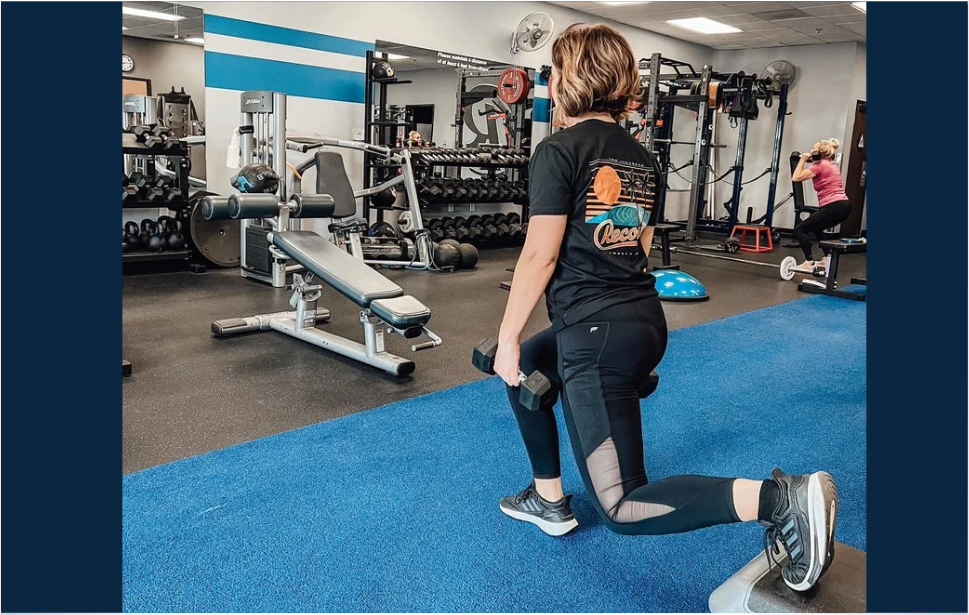
When you train one limb at a time, there’s nowhere to hide. Your weaker side has to produce the work on its own, and that reveals exactly where the gaps are. That clarity is one of the most valuable things you can get from a training program.
Single-arm and single-leg training strengthens the stabilizing muscles that bilateral movements tend to bypass. It improves coordination between your brain and your body. And it builds the kind of functional strength that carries over into real life: getting up from a chair, carrying groceries, catching yourself before a fall.
Your Weak Side Is Telling You Something
Frustration during unilateral work is feedback, not failure. It means that side needs more attention, not less. When you train it consistently, the gap closes and your overall strength, stability, and movement quality improve across the board.
The goal isn’t perfect symmetry. It’s a body that moves reliably, stays out of pain, and keeps doing the things you want it to do for decades to come.
Final Thoughts
When you are juggling a demanding career and a packed schedule, it’s easy to ignore those quiet warning signs until they turn into chronic pain.
Recoup Personal Training was built for driven men and women to feel attractive, confident, and in control of their health again.
If you’re ready to stop guessing and start training smarter, our Renew You Program is designed is built to transition you out of physical survival mode and back into peak performance, all while working with your busy schedule. You can expect:
- A Health and Strength Assessment (1 hour) & InBody Scan: Uncover how stress is impacting your energy, metabolism, and body composition.
- Personalized Recovery Plan: No generic “just relax” advice, just science-backed strategies tailored to your nervous system.
- 3 One-on-One Training Sessions: Move in a way that releases stress (instead of adding to it).
- Mobility & Injury Evaluation: Because tension lives in the body, too.
Ready to turn your weak side into your greatest asset? Schedule Your Free Discovery Call today!